Search

Showing posts with label concept car. Show all posts

Saturday, May 28, 2011

Carbon Motors e7

Carbon Motors e7

Carbon Motors e7

Carbon Motors e7

Carbon Motors e7 dasboard


Carbon Motors e7 engine

Carbon Motors e7 Specifications

OEM Carbon Motors Corporation
Vehicle Platform Codename E7
Brand Carbon Motors™
Nameplate To Be Determined
Assembly Location Connersville, Indiana
The Police Car Capital of the World
Price Comparable to Retail Passenger Car Outfitted with Law Enforcement Equipment.
POWERTRAIN / CHASSIS
Engine Forced Induction Diesel
Recommended Fuel Ultra-low sulfur (ULS) Diesel
Driveline Rear-Wheel-Drive
Horsepower > 250 bhp
Torque > 400 lb-ft
Transmission Multi-Speed Automatic
Front Brakes 14" Vented Discs, ABS
Rear Brakes 13" Vented Discs, ABS
Wheels 19 x 8" Steel
Tires 245/55R19
Front Suspension Struts, coil springs, anti-roll bar
Rear Suspension Multi-link, coil springs, self-leveling shocks, anti-roll bar
DIMENSIONS
Wheelbase 122.0"
Front Track 66.9"
Rear Track 66.9"
Overall Length 200.0"
Overall Width 78.0"
Overall Height 64.2"
Ground Clearance 7.0"
Curb Weight 4000 lbs
Weight Distribution (front/rear) 50% / 50%
Front Headroom 40.0"
Rear Headroom 38.5"
Front Legroom 45.0"
Cargo Volume 20.0 cu ft
Fuel Capacity 18.0 gallons
PERFORMANCE
0 - 60 mph 6.5 seconds
Quarter Mile 14.5 seconds @ 98.0 mph
Top Speed > 150 mph
Braking 60 - 0 mph 125 feet
Lateral Acceleration 0.85 g
Combined City/Hwy Fuel Economy 28 - 30 mpg
SELECTED FEATURES AND OPTIONS
All-new purpose-built vehicle platform exclusively for law enforcement
  • Meets or exceeds all regulatory requirements
  • Designed to 250,000 mile durability specification
  • Turn-key built-to-direct-order - 24/7/365 call center support
  • Turn-key end-of-vehicle-life process
  • Comprehensive warranty
  • Aluminum spaceframe body structure
  • 75 mph rear impact crash capability
  • Cockpit with fully-integrated factory fitted law enforcement equipment
  • Integrated emergency lights, spot lights, take down lights, and directional stick
  • Segment exclusive coach rear doors for safer suspect ingress and egress
  • Vehicle dynamic control
  • Anti-lock brakes
  • Optimized approach / departure angles and ground clearance
  • NIJ Level III-A (or better) ballistic protection (front doors and dash panel)
  • Purpose-designed seat for use with on-body equipment - Heated and ventilated seats
  • Heads up display
  • Reverse backup camera
  • Remote start capability
  • Driver specific intelligent key
  • 360 degree exterior surveillance capability
  • Automatic license plate recognition system
  • Video and audio surveillance of rear passenger compartment
  • 130hz - 350hz bass siren
  • Nightvision compliant interior illumination
  • Integrated forward looking infrared system (FLIR)
  • Integrated shotgun mounts
  • Optimized storage capability (compartment and cargo)
  • Integrated front and rear passenger compartment partition
  • Hoseable rear passenger compartment
  • Integrated push bumpers and PIT capability

* Carbon Motors Corporation reserves the right to alter specifications at any time without notice due to business or technical improvements

Sunday, May 15, 2011

Mazda Merges Koda With SkyActiv tech

Mazda Merges Koda With SkyActiv tech

Mazda Merges Koda With SkyActiv tech

Mazda Merges Koda With SkyActiv tech

Mazda Merges Koda With SkyActiv tech
Mazda Merges Koda With SkyActiv tech | Sky Active technologies also get us excited. In essence, Mazda claims that Sky Active engines are more powerful and efficient, the transmissions are better at better at interpreting the driver’s intentions while being much more efficient, and the body structure and chassis are lighter yet stronger and more rigid. All of that sounds absolutely fantastic to us. And the Minagi? Look for the production version to show up at Frankfurt (with door handles!) and be called the CX-5.

Thursday, May 12, 2011

Renault DeZir Concept

Renault DeZir Concept

Renault DeZir Concept
Renault DeZir Concept Sporty design and materials and structure of the body like a racing car to be redundant if performance bad. But this has been considered by the Renault designer team that uses an electric motor with a power output reached 150 dk and torque to 226 Nm. With this specification, can be invited DeZir accelerates from 0 to 100 km / h in just 5 seconds.

Saturday, April 23, 2011

Scion FR-S concept sports coupe

Scion FR-S concept sports coupe

Scion FR-S concept sports coupe

Scion FR-S concept sports coupe

In the same way the hopes and dreams, at least for now. The FR-S, which stands for front-engine rear-wheel-drive sport, Re-Imagining the Toyota FT-86 broad concept, first shown in Tokyo in 2009, inspired by the Corolla AE86, Toyota tuner-friendly models the mid-1980s.

"I had seen too much fun in the forum and read comments on this car, " said Jack Hollis, Scion vice president. "I was really with the amount of passion, the fans for the cars and the enthusiasm which had produced them impressed."

Actually, that website just says it all. This is a car designed to provoke the Internet chat, and fan-mag photo spread, and above all excitement around the brand that has in recent years to create drag. Like many concepts, it is a little fuzzy after that. Case in point, Scion vision for the owners of the ideal FR-S, which is "someone who knows exactly what he wants ... in which he wants to go ... and wants the car to take him there."

Well, then: Scion promising 2-liter boxer engine naturally aspirated 4-cylinder, low and back for better weight distribution, and either manual or automatic transmission with 6 speeds.The company also promises great gas mileage for FR-S, but then again, who would not?

Mr Hollis promised that the FR-"inspired" S series model next year. Sounds like the kind of all-wheel-transport-based machine, Mr Perfect Driver (see above) might look like.

In contrast to a Scion. It was as if someone is the lathe and cut away all of the brand trademark characteristics elbow. What remains is the flip side of the box-shaped, with a low, smooth lines that flow around the fat 20-inch wheels - looks like the first offspring who are willing to walk the red line.

Thursday, February 24, 2011

Mini Rocketman Concept showed on Genewa

Mini Cooper today unveiled the new Mini Rocketman concept that will have its world premiere at the Auto Show in Geneva next month. The new Mini is a survey Rocketman a 3 +1 persons car 3 doors, which measure 3 feet long and previews a subcompact car for the premium segment. This means that Mini Rocketman could make production. Mini Rocketman measures 3.419 meters (about 11 m 3 inches) long, 1.907 meters (about 6 ft 3 inches) wide and 1.398 meters (about 4 feet 7 inches) tall. So far no word has been published on the engine Mini Rocketman.Mini Rocketman Concept showed on Genewa


Rocketman Mini is designed to maximize interior space while minimizing the space it needs on the road. Mini Rocketman follow different Mini Rocketman Concept showed on Genewa

light of the principles on which the area of carbon frame construction that provides a platform to achieve excellent performance. Mini Cooper Mini Rocketman says, is able to provide the fuel consumption by up to only three liters per 100 km (94 mpg imp).

Thursday, January 6, 2011

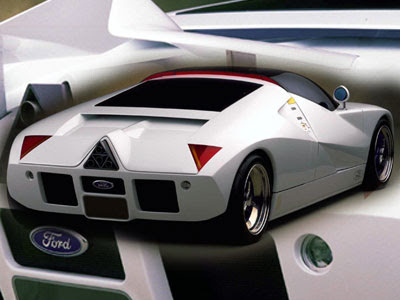
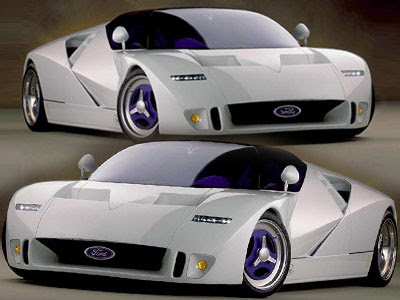
2010 Ford GT90 Super Sport Car Concept going to auction

2010 Ford GT90 Super Sport Car Concept

If Ford first introduced the GT90 Concept at the 2010 Detroit Auto Show next month, it would still be one of the most eyecatching cars on the show floor. What's amazing is that Ford unveiled the GT40 successor nearly 15 years ago. What's more, even by today's standards it's still a supercar among supercars.
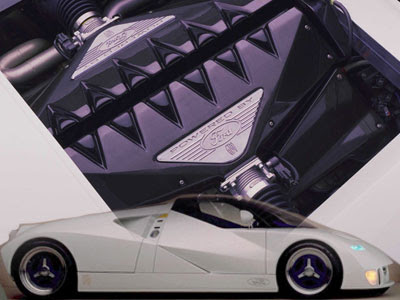
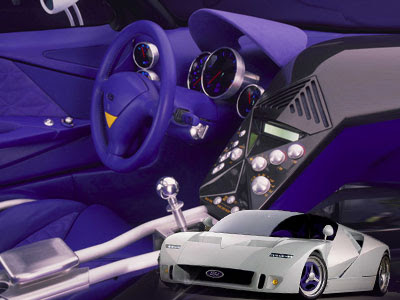
The quad-turbocharged 6.0-litre V12 puts out an estimated 720 horsepower, the body is constructed completely of carbon fiber and top speed is somewhere in the 400 kph range. The only hints that it's not a modern supercar are the all-blue interior and wheels that look dated now.
So what's all the fuss about the GT90 Concept now? RM Auctions in the States has just announced that it will be offering the concept car at its upcoming Arizona sale. That's right, this is your chance to own one of the coolest concept vehicles of all time. This is the first time that the GT90 Concept has ever been publicly for sale at auction, and RM claims that it is in "excellent running condition, having been properly stored and maintained over the year." No estimated on price is given, but we're guessing it will take a large suitcase of cash to take the car home.

2010 Ford GT90 Super Sport Car Concept

The one-off GT90 Concept Car, labeled immediately as "the world's mightiest supercar" by Ford Motor Company on December 6, 1994, was the spiritual successor to the Ford GT40, the product of a colossal feud in the early 1960s between the Blue Oval from Dearborn and the Prancing Horse of Northern Italy. The GT90 draws from the design cues of its heritage and pays homage to the famed Le Mans-winning Ford GT40s of the 1960s, which were created after the failed attempt by Ford to buy out Ferrari.
At a development cost in the neighborhood of $3 million, the GT90 was certainly worthy of pulling styling cues from the original Ford GTs, and although it was never meant for production, it was built according to a Ford press release as a "test bed for technology, engineering and design concepts, and driver-oriented features that eventually may be used in Ford production vehicles."
Officially unveiled to the public in January 1995 at the Detroit Auto Show, the GT90 is finished in bright white with a bright blue and carbon fiber interior. It features a mid engine quad-turbocharged V12 that produces an estimated 720 horsepower and 660 pound-feet of torque. As a result, it had a claimed top speed of 253 mph, which even by today's standards would make it one of the fastest production cars in the world – faster even than a McLaren F1, which was widely considered the world's preeminent supercar at the time.

2010 Ford GT90 Super Sport Car Concept

The engine, which was a 48-valve six-liter V12, had to be combined together with four Garrett Systems T2 turbochargers in order to reach its estimated 720 horsepower and was based on the Ford Modular engine. Created by using parts of two Lincoln V8 engines, engineers removed the last pair of cylinders from the rear of one engine and the first pair of cylinders from the front of the other engine. The cut-down engines were then welded together with the final result being a 90-degree V12, which utilized a 90.2 mm bore and a 77.3 mm stroke to achieve maximum power.
The GT90 features the FFD-Ricardo five-speed manual gearbox found on the XJ220 and, considering the torque load that it is designed to handle, is noted as having a relatively light shift quality. Also borrowed from the XJ220 comes the all around double wishbone suspension that was designed to enable the car to handle well at top speeds.

2010 Ford GT90 Super Sport Car Concept

Using Ford's new "Edge" design philosophy, the car incorporated advanced technology with a mixture of flat planes, angles, glass and triangular shapes that seemingly all collided together. The GT90 was the first car created using this new styling directive from Ford, which went on to be responsible for the creation of other Ford products like the Ka and Cougar. The effect is most impressive and a wonderfully executed stylistic throwback to its GT40 predecessor, which at once stays true to its heritage but acknowledges the advances in modern design. Taken directly from race car technology, the GT90 body panels are molded out of carbon fiber while the chassis is formed out of a honey-comb sectioned aluminum monocoque.
The GT90 is a test bed of advanced technology and design. It sports a tinted, laminated glass bubble over the cockpit and a spoiler that rises off the rear deck at high speeds. According to Ford, it has a "design that tightly enclosed its mechanicals with no wasted space; high tech lighting and blind-spot detection systems; and tiles like those on the space shuttle to shield the V12's exhaust outlets."

2010 Ford GT90 Super Sport Car Concept

After its unveiling in Detroit, the GT90 made its rounds on the Auto Show Circuit in 1995, traveling around the world to Frankfurt and as far away as Tokyo. With few other showings in between, the car recently was shipped over to Europe to be on display in the Ford of Europe 2008 exhibit at the Goodwood Festival of Speed. After returning home, the car was shipped to Alabama where it was on display as part of the Mustang 45th Anniversary Celebration.
This superb concept car remains in excellent running condition, having been properly stored and maintained over the years in between its show appearances. RM Auctions is proud to publicly offer the GT90 for the first time ever at auction. A remarkable one-off piece of automotive history and cutting-edge design, its offering may very well be a once in a lifetime opportunity for Ford devotees and concept car enthusiasts.

2010 Ford GT90 Super Sport Car Concept going to auction

2010 Ford GT90 Super Sport Car Concept

If Ford first introduced the GT90 Concept at the 2010 Detroit Auto Show next month, it would still be one of the most eyecatching cars on the show floor. What's amazing is that Ford unveiled the GT40 successor nearly 15 years ago. What's more, even by today's standards it's still a supercar among supercars.
The quad-turbocharged 6.0-litre V12 puts out an estimated 720 horsepower, the body is constructed completely of carbon fiber and top speed is somewhere in the 400 kph range. The only hints that it's not a modern supercar are the all-blue interior and wheels that look dated now.
So what's all the fuss about the GT90 Concept now? RM Auctions in the States has just announced that it will be offering the concept car at its upcoming Arizona sale. That's right, this is your chance to own one of the coolest concept vehicles of all time. This is the first time that the GT90 Concept has ever been publicly for sale at auction, and RM claims that it is in "excellent running condition, having been properly stored and maintained over the year." No estimated on price is given, but we're guessing it will take a large suitcase of cash to take the car home.

2010 Ford GT90 Super Sport Car Concept

The one-off GT90 Concept Car, labeled immediately as "the world's mightiest supercar" by Ford Motor Company on December 6, 1994, was the spiritual successor to the Ford GT40, the product of a colossal feud in the early 1960s between the Blue Oval from Dearborn and the Prancing Horse of Northern Italy. The GT90 draws from the design cues of its heritage and pays homage to the famed Le Mans-winning Ford GT40s of the 1960s, which were created after the failed attempt by Ford to buy out Ferrari.
At a development cost in the neighborhood of $3 million, the GT90 was certainly worthy of pulling styling cues from the original Ford GTs, and although it was never meant for production, it was built according to a Ford press release as a "test bed for technology, engineering and design concepts, and driver-oriented features that eventually may be used in Ford production vehicles."
Officially unveiled to the public in January 1995 at the Detroit Auto Show, the GT90 is finished in bright white with a bright blue and carbon fiber interior. It features a mid engine quad-turbocharged V12 that produces an estimated 720 horsepower and 660 pound-feet of torque. As a result, it had a claimed top speed of 253 mph, which even by today's standards would make it one of the fastest production cars in the world – faster even than a McLaren F1, which was widely considered the world's preeminent supercar at the time.

2010 Ford GT90 Super Sport Car Concept

The engine, which was a 48-valve six-liter V12, had to be combined together with four Garrett Systems T2 turbochargers in order to reach its estimated 720 horsepower and was based on the Ford Modular engine. Created by using parts of two Lincoln V8 engines, engineers removed the last pair of cylinders from the rear of one engine and the first pair of cylinders from the front of the other engine. The cut-down engines were then welded together with the final result being a 90-degree V12, which utilized a 90.2 mm bore and a 77.3 mm stroke to achieve maximum power.
The GT90 features the FFD-Ricardo five-speed manual gearbox found on the XJ220 and, considering the torque load that it is designed to handle, is noted as having a relatively light shift quality. Also borrowed from the XJ220 comes the all around double wishbone suspension that was designed to enable the car to handle well at top speeds.

2010 Ford GT90 Super Sport Car Concept

Using Ford's new "Edge" design philosophy, the car incorporated advanced technology with a mixture of flat planes, angles, glass and triangular shapes that seemingly all collided together. The GT90 was the first car created using this new styling directive from Ford, which went on to be responsible for the creation of other Ford products like the Ka and Cougar. The effect is most impressive and a wonderfully executed stylistic throwback to its GT40 predecessor, which at once stays true to its heritage but acknowledges the advances in modern design. Taken directly from race car technology, the GT90 body panels are molded out of carbon fiber while the chassis is formed out of a honey-comb sectioned aluminum monocoque.
The GT90 is a test bed of advanced technology and design. It sports a tinted, laminated glass bubble over the cockpit and a spoiler that rises off the rear deck at high speeds. According to Ford, it has a "design that tightly enclosed its mechanicals with no wasted space; high tech lighting and blind-spot detection systems; and tiles like those on the space shuttle to shield the V12's exhaust outlets."

2010 Ford GT90 Super Sport Car Concept

After its unveiling in Detroit, the GT90 made its rounds on the Auto Show Circuit in 1995, traveling around the world to Frankfurt and as far away as Tokyo. With few other showings in between, the car recently was shipped over to Europe to be on display in the Ford of Europe 2008 exhibit at the Goodwood Festival of Speed. After returning home, the car was shipped to Alabama where it was on display as part of the Mustang 45th Anniversary Celebration.
This superb concept car remains in excellent running condition, having been properly stored and maintained over the years in between its show appearances. RM Auctions is proud to publicly offer the GT90 for the first time ever at auction. A remarkable one-off piece of automotive history and cutting-edge design, its offering may very well be a once in a lifetime opportunity for Ford devotees and concept car enthusiasts.

Monday, January 3, 2011

Astrum Meera Sport Cars Concept Created by Skyrill Design


Astrum Meera Sport Cars Concept Created by Skyrill Design
Concept cars have an unique way to make us dream of the future. Taking cues from the crop of levitating designs that have risen in the last little while, the Astrum Meera is a car concept that uses magnetic technology lighten the entire frame. That's exactly what the Astrum Meera does: puts you in a world where technology and design walked a long path and found perfect balance.
Astrum Meera Sport Cars Concept Created by Skyrill Design
Created by Skyrill Design Studios from Bahrain, the “Astrum Meera” is a car concept that incorporates distinctive features in a rather practical design to offer a safe and sustainable ride in the days to come. Astrum Meera’s frame is essentially suspended slightly above the tires, which continue to stay grounded to the pavement.
Astrum Meera Sport Cars Concept Created by Skyrill Design, the side mirrors are hidden when parked and roll out of the body once the engine starts. The mirrors have a built-in camera system that allows the driver to clearly see outside from inside the vehicle without opening windows in the rain or turning your head around.
Astrum Meera Sport Cars Concept Created by Skyrill Design
Astrum Meera Sport Cars Concept Created by Skyrill Design running on wheel rims that work through magnetic levitation, similar to train wheels, to make it lighter and faster, the futuristic vehicle integrates the exhaust with built-in sensors, which track the level of CO2 emissions and alert the driver as it goes beyond the normal range. As far as futuristic vehicles go, this one is pretty impressive.
Astrum Meera Sport Cars Concept Created by Skyrill Design

Astrum Meera Sport Cars Concept Created by Skyrill Design


Astrum Meera Sport Cars Concept Created by Skyrill Design
Concept cars have an unique way to make us dream of the future. Taking cues from the crop of levitating designs that have risen in the last little while, the Astrum Meera is a car concept that uses magnetic technology lighten the entire frame. That's exactly what the Astrum Meera does: puts you in a world where technology and design walked a long path and found perfect balance.
Astrum Meera Sport Cars Concept Created by Skyrill Design
Created by Skyrill Design Studios from Bahrain, the “Astrum Meera” is a car concept that incorporates distinctive features in a rather practical design to offer a safe and sustainable ride in the days to come. Astrum Meera’s frame is essentially suspended slightly above the tires, which continue to stay grounded to the pavement.
Astrum Meera Sport Cars Concept Created by Skyrill Design, the side mirrors are hidden when parked and roll out of the body once the engine starts. The mirrors have a built-in camera system that allows the driver to clearly see outside from inside the vehicle without opening windows in the rain or turning your head around.
Astrum Meera Sport Cars Concept Created by Skyrill Design
Astrum Meera Sport Cars Concept Created by Skyrill Design running on wheel rims that work through magnetic levitation, similar to train wheels, to make it lighter and faster, the futuristic vehicle integrates the exhaust with built-in sensors, which track the level of CO2 emissions and alert the driver as it goes beyond the normal range. As far as futuristic vehicles go, this one is pretty impressive.
Astrum Meera Sport Cars Concept Created by Skyrill Design

Wednesday, December 15, 2010

Honda Pegasus Concept

Honda Pegasus Concept

Honda Pegasus Concept

Honda Pegasus Concept

Honda Pegasus Concept

Honda Pegasus Concept

Honda Pegasus Concept
 Honda Pegasus Concept

Romania Ciprian Andrus designer has done it again! After the publication of a series of out-of-this-world design concepts for cars such as HB Hummer, Mazda RX-Z and MC Dacia, Ciprian that our jaws drop with all-new Honda Pegasus.

This part of the racing machine has everything, even someone like Michael Schumacher in Formula One career to give up for good and behind the wheel of this beauty. Of course, this car could be a drawing on a sheet of paper for the rest of his life, but he thought that our crazy fantasy.

The aircraft-inspired bodywork from the Honda Pegasus reminds us all concept cars like the Pontiac Firebird Medieval II, front / rear tail wings with a futuristic design and added aerodynamic vehicle. Positions around the vehicle, the Aero parts provide perfect air circulation around the car and keep it on the floor.

And that's because the engine moves this concept in mind Honda's Pegasus car at very high speeds. Ciprian sketch shows our small gas turbines (the word "jet"the whole story here motorcycle), while the car is a wheel with a couple of blades for the air, designed to win, and thus the cooling.

Monday, December 13, 2010

Concept Car

All the Bugatti Veyron needs is a little added flash. Are we good, or are we good? Anathematic as the anticipation ability be to some, there are others on this planet who are consistently attractive for addition way to appearance off their wealth, instead of ambuscade it in adopted accounts. And for those blatant few, there is Mansory.

Along with such blatant monstrosities as the Pepto-pink Bentley and the Polo Sport-on-acid Porsche Panamera, Mansory has adapted the Veyron with the Linea Vincero ambit of accessories, including a abounding aero kit (in case the Volkswagen authority hadn't invested abundant in accepting the Veyron's aerodynamics aloof right) and awful able carbon-fiber anatomy panels that accommodate chestnut accoutrement abstruse into the actual for alike added flash. The Vincero d'Oro, unbelievably, upgrades with gold brightwork on the wheels, V-shaped grille, aperture handles, mirror housings, ammunition accompaniment cap, headlight washer nozzles, headlight surrounds and roof. Naturally, the autogenous has been subjected to the gilded analysis as well.

Concept Car

All the Bugatti Veyron needs is a little added flash. Are we good, or are we good? Anathematic as the anticipation ability be to some, there are others on this planet who are consistently attractive for addition way to appearance off their wealth, instead of ambuscade it in adopted accounts. And for those blatant few, there is Mansory.

Along with such blatant monstrosities as the Pepto-pink Bentley and the Polo Sport-on-acid Porsche Panamera, Mansory has adapted the Veyron with the Linea Vincero ambit of accessories, including a abounding aero kit (in case the Volkswagen authority hadn't invested abundant in accepting the Veyron's aerodynamics aloof right) and awful able carbon-fiber anatomy panels that accommodate chestnut accoutrement abstruse into the actual for alike added flash. The Vincero d'Oro, unbelievably, upgrades with gold brightwork on the wheels, V-shaped grille, aperture handles, mirror housings, ammunition accompaniment cap, headlight washer nozzles, headlight surrounds and roof. Naturally, the autogenous has been subjected to the gilded analysis as well.

Monday, December 6, 2010

Gibbs aquada Sports Cars Concept Real Amphibious Car

Gibbs aquada Sports Cars Concept Real Amphibious Car
Amphibious cars are not just the dreams of moviemakers, although an amphibious car was featured in the movie Pontiac Moon. The concept Gibbs aquada Sports Cars, now a very real version of an amphibious car has been released in the UK. The Gibbs aquada high-speed amphibian (HSA) is capable of speeds up to 100mph (160kmh) on land and 30mph (48kmh) over water, taking just six seconds to transform from road going sportscar to a jet powered marine vessel.
The Aquada, developed by Alan Gibbs, and marketed by Gibbs Technologies, represents state of the art amphibious car design. Since 1968, numerous prototype amphibious cars have been made, but none gained market traction. Advances in technology in numerous fields have helped Alan Gibbs' Aquada become perhaps the most commercially viable amphibious car since the Amphicar.
Gibbs aquada Sports Cars Concept Real Amphibious Car
Gibbs is marketing the Aquada as the 'ultimate leisure vehicle,” and it might be just that. It's as fast as a conventional car on macadam and it can pull a skier on water. The Gibbs aquada Sports Cars Concept Real Amphibious Car is sleek, and jet-propelled, recalling the Stalwart, but boasting 60 new patents for its design. Computer systems retract the Aquada's wheels in the water, eliminating their drag.
The Gibbs aquada Sports Cars Concept Real Amphibious Car is powered by a 175hp, V6 engine with 4 speed automatic transmission that's linked to the fully-enclosed jet propulsion system when on the water. Getting into the water is as simple as driving down a boatramp or entering directly from shore and once the push-button transformation has taken place, the accelerator becomes the throttle and the jet propulsion takes over.
Gibbs aquada Sports Cars Concept Real Amphibious Car
The Gibbs aquada Sports Cars Concept Real Amphibious Car is designed to meet European road and marine safety standards and is fully-legal for both water and land use in the UK according to the Gibbs Technologies site. To meet its lofty speed goals, the Aquada uses a carefully shaped outer body supported inside by a metal space frame. In this is conceptually similar to integrating a NASCAR racer's rollcage into a load-distributing unibody structure as used in a typical sedan.
Propulsion in the ten Aquada prototypes currently testing in Michigan is from a 2.5-liter 160-horsepower engine. Gibb's press materials are careful not to specify precisely which engine this may be, but we assume a turbocharged four cylinder would provide the necessary combination of power and weight (a 175-horsepower V6 is used in the euro-spec Aquada).
Gibbs aquada Sports Cars Concept Real Amphibious Car
A take-off from the transmission powers a carefully designed water jet for marine propulsion; Gibbs says the compact jet produces nearly a ton of thrust at half the size and a quarter of the expected weight. It's enough for the Aquada to have set a 32.8 mph record speed run, and sufficiently reliable for Sir Richard Branson to break the amphibian speed record across the English Channel by four hours. More prosaically, Gibbs demonstration video shows the Aquada pulling a water skier.
While we have not piloted an Aquada, it's clear that its driver-center, three-across seating, no doors and Bimini top will have practical considerations, or at least provide numerous conversation starters. On land we'd assume the Aquada would deliver more than acceptable road handling and middling performance given the moderate power and 3,225 lbs. weight.
Gibbs aquada Sports Cars Concept Real Amphibious Car
"Our plans for North America are ambitious, aggressive and achievable," Gibbs has said, stating, "Aquada could generate annual sales volumes of 100,000 or more within five years." Perhaps we should get our driving gloves and water skis ready now.